This Blog is an Open Resource Containing Links, Commentary, Back Ups, and Research Into a Wide Variety of Topics and How They Can Connect to the Modern World: Alchemy, Astronomy, Astrology, Archeoastrology, Egyptology, Etymology, Gematria, History, Isopsephy, Numerology, Esoteric Knowledge, Occult, Magic, Gnosticism, and Many More. This blog features materials protected by the Fair Use guidelines of Section 107 of the Copyright Act. All rights reserved to copyright owners.
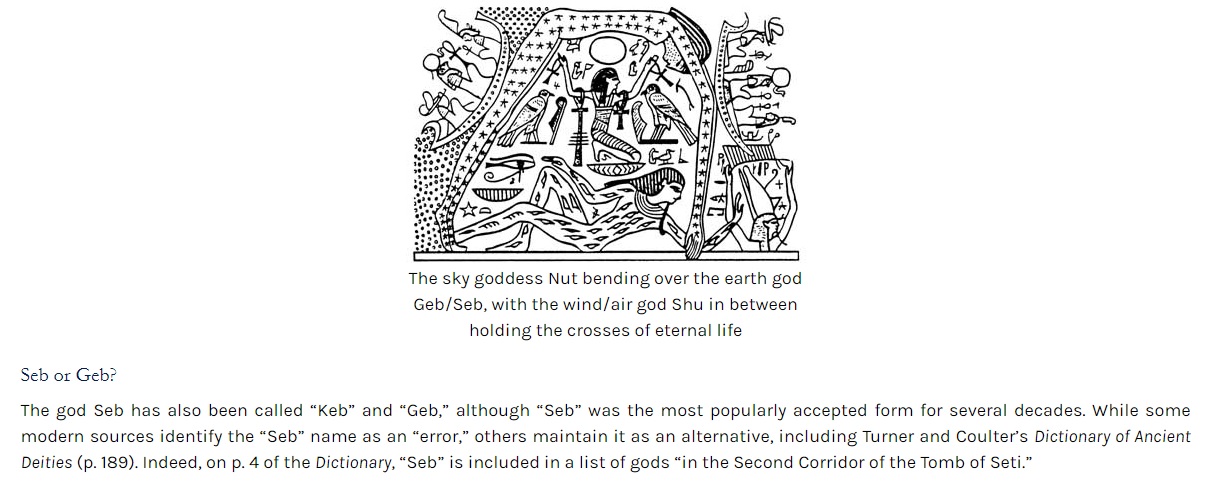
Geb was symbolized in Egypt as a goose that laid a blue egg that hatched a golden sun. Geb (or Seb) is Ptah, the blacksmith, the artisan who later became in Christianity to be known as Joseph. The sun rises in the East and sets in the West, just as much of our modern day religion originated in the Eastern world (the Orient) and is part of the Western world today.
Eta is the 7th letter of the Greek alphabet, but is given a gematria value of 8.
The longest chapter in the Bible is Psalms 119, which is 176 verses. This chapter is said to separate the Bible into two. 8 x 22 (each letter Aleph to Tav) = 176.
In Egypt, the P is often pronounced as "b". Ptah may well be Buddha.
I suppose I was looking at Exodus 25:10 by accident when I noticed this. I should have been reading Leviticus 25:10, which is stamped on the Liberty Bell and is where liberty is mentioned in the Bible.
"of shittim wood" in Hebrew has a value of 474. The Bible says the ark was made of it.
And out of the ground made the LORD God to grow every tree that is pleasant to the sight, and good for food; the tree of life also in the midst of the garden, and the tree of knowledge of good and evil. - Genesis 2:9
Prajapati (Sanskrit: प्रजापति) is a compound of "praja" (creation, procreative powers) and "pati" (lord, master). The term means "lord of creatures", or "lord of all born beings". In the later Vedic texts, Prajapati is a distinct Vedic deity, but whose significance diminishes. Later, the term is synonymous with other gods, particularly Brahma. Still later, the term evolves to mean any divine, semi-divine or human sages who create something new.
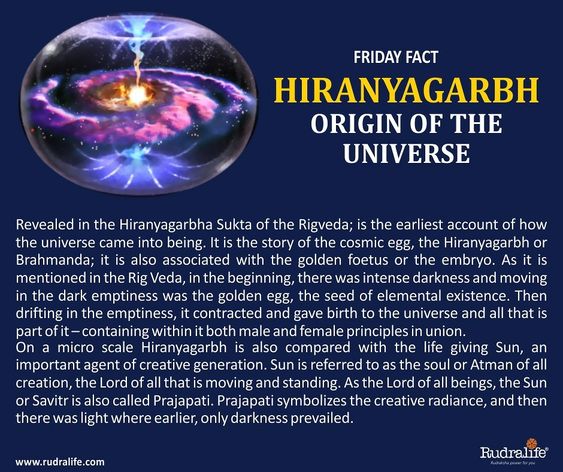
According to Robert Graves, the name of /PRA-JĀ[N]-pati/ ('progeny-potentate') is etymologically equivalent to that of the oracular god at Colophon (according to Makrobios), namely /prōtogonos/.[citation needed] The cosmic egg concept linked to Prajapati and Protogonos is common in many parts of the world, states David Leeming, which appears in later Orphic cult in Greece.
In the Rigveda, Prajapati appears as an epithet for Savitr, Soma, Agni and Indra, who are all praised as equal, same and lord of creatures.[ Elsewhere, in hymn 10.121 of the Rigveda, is described Hiranyagarbha (golden embryo) that was born from the waters containing everything, which produced Prajapati. It then created manah (mind), kama (desire) and tapas (heat). However, this Prajapati is a metaphor, one of many Hindu cosmology theories, and there is no supreme deity in the Rigveda. One of the striking features about the Hindu Prajapati myths, states Jan Gonda, is the idea that work of creation is a gradual process, completed in stages of trial and improvement.
In the medieval era texts of Hinduism, Prajapati refers to legendary agents of creation, working as gods or sages, who appear in every cycle of creation-maintenance-destruction (manvantara). Their numbers vary between seven, ten, sixteen or twenty-one.
Hindu temples in Bali Indonesia called Pura Prajapati, also called Pura Mrajapati, are common. They are most associated with funeral rituals and the Ngaben (cremation) ceremony for the dead.
The Orphic Egg in the Ancient Greek Orphic tradition is the cosmic egg from which hatched the primordial hermaphroditic deity Phanes/Protogonus (variously equated also with Zeus, Pan, Metis, Eros, Erikepaios and Bromius) who in turn created the other gods.[1] The egg is often depicted with the serpent-like creature, Ananke, wound about it.
In Greek myth, particularly Orphic thought, Phanes is the golden winged primordial being who was hatched from the shining cosmic egg that was the source of the universe. Called Protogonos (First-Born) and Eros (Love) — being the seed of gods and men — Phanes means "to bring light" or "to shine" and is related to the Greek "to shine forth" as well as the Latin "Lucifer". An ancient Orphic hymn addresses him thus:
Ineffable, hidden, brilliant scion, whose motion is whirring, you scattered the dark mist that lay before your eyes and, flapping your wings, you whirled about, and through this world you brought pure light.
Ophiuchus (/ɒfiˈjuːkəs/) is a large constellation straddling the celestial equator. Its name is from the Greek Ὀφιοῦχος (Ophioukhos, "serpent-bearer"), and it is commonly represented as a man grasping a snake (symbol ⛎, Unicode U+26CE). The serpent is represented by the constellation Serpens. Ophiuchus was one of the 48 constellations listed by the 2nd-century astronomer Ptolemy, and it remains one of the 88 modern constellations. An old alternative name for the constellation was Serpentarius (/sɜːrpənˈtɛəriəs/).
Ophiuchus lies between Aquila, Serpens, Scorpius, Sagittarius, and Hercules, northwest of the center of the Milky Way. The southern part lies between Scorpius to the west and Sagittarius to the east. In the northern hemisphere, it is best visible in summer. It is opposite of Orion.
Once, all life in the universe knew the Flower of Life as the creation pattern -- the geometrical design leading us into and out of physical existence. Then from a very high state of consciousness, we fell into darkness and forgot who we were. For thousands of years, the secret was held in ancient artifacts and carvings around the world and encoded in the cells of all life.
Now we are rising up from that sleep, shaking old, stale beliefs from our minds and glimpsing the golden light of this new dawn streaming through the windows of perception.
The concepts in this video are inspired by "The Ancient Secret of the Flower of Life" by Drunvalo Melchizedek